Rational Septet: Seven Great Thinkers on the Modern World
Introduction
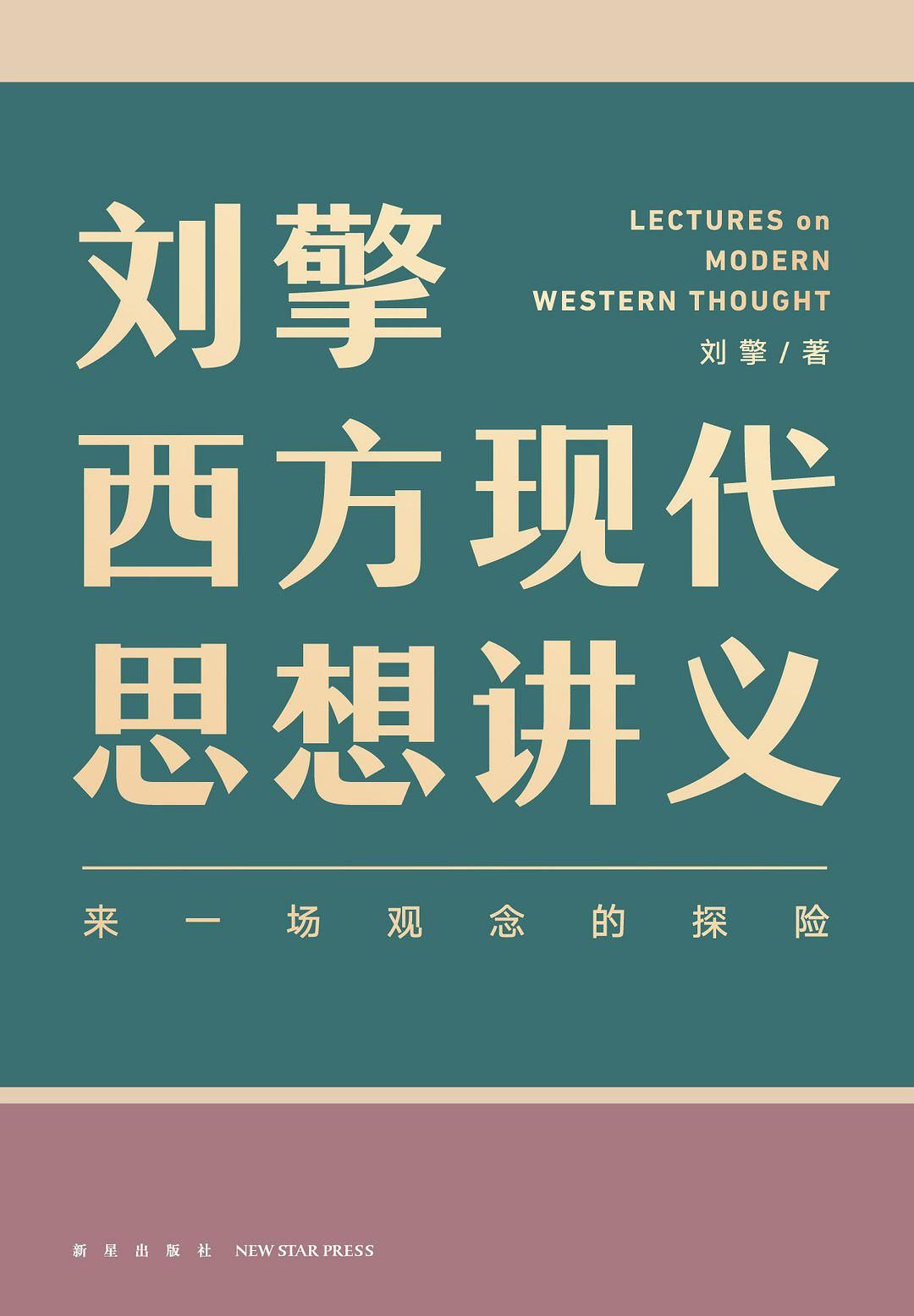
On July 27, 2022, in the middle of a sticky Beijing summer, I finished Liu Qing's Lectures on Modern Western Thought. I had just completed my first year at Tsinghua. On the surface, everything looked bright and full of possibility. Internally, I was struggling. I kept asking the same questions: Who am I? Why am I here? Why is the world arranged this way? What kind of future is waiting for me?
That book did not give me final answers, but it changed the shape of my questions. When I closed it and walked through campus that night, I felt that many large and abstract problems had suddenly acquired outlines. They were still difficult, but no longer shapeless.
At the end of 2024, I returned to the book and found that its arguments had already become part of how I think. This essay follows seven major thinkers from the book and revisits their reflections on rationality, modernity, freedom, justice, and the conditions of human life.
Rationality
When we call someone “rational,” what do we really mean?
In everyday language, rationality is often treated as the opposite of emotion: reason is calm and analytical, emotion is passionate and intuitive. But this contrast is too crude. In the philosophical tradition, rationality is not merely a cold computational tool. It is a human capacity for judgment, analysis, and critique.
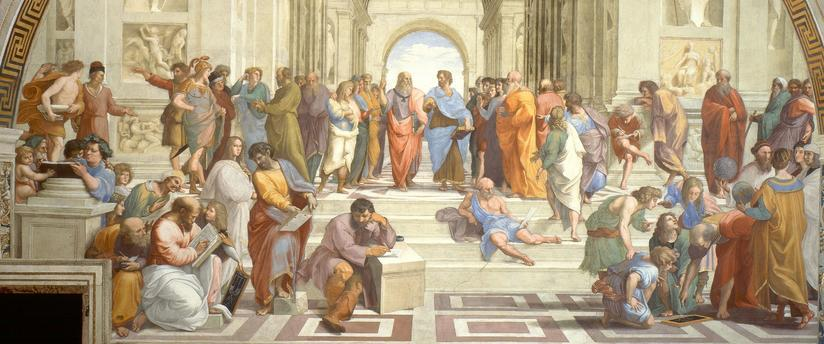
Plato saw reason as the path toward truth. In his framework, the sensible world is unstable and incomplete, while the realm of forms contains what is real and enduring. Reason allows us to move beyond appearances and approach essence.
Kant complicated the picture. He distinguished sensibility, understanding, and reason. Sensibility receives experience, understanding organizes it, and reason reaches toward ultimate questions. Yet reason has limits. It can guide moral life as practical reason, but as theoretical reason it easily overreaches when it tries to settle questions about the soul, the cosmos, or God.
So what should rationality mean for us today? It is the ability to understand the world through logic and reflection, but also the ability to recognize the limits of logic and reflection. True rationality includes self-critique. It does not worship reason blindly, nor does it reject reason outright. It asks where reason works, where it fails, and what follows from that boundary.
Modernity
Modernity is a broad and difficult idea, but one basic shift is clear: the modern world gradually moves away from a social order grounded in religion and inherited tradition, and toward one grounded in science, individual freedom, markets, and human reason.
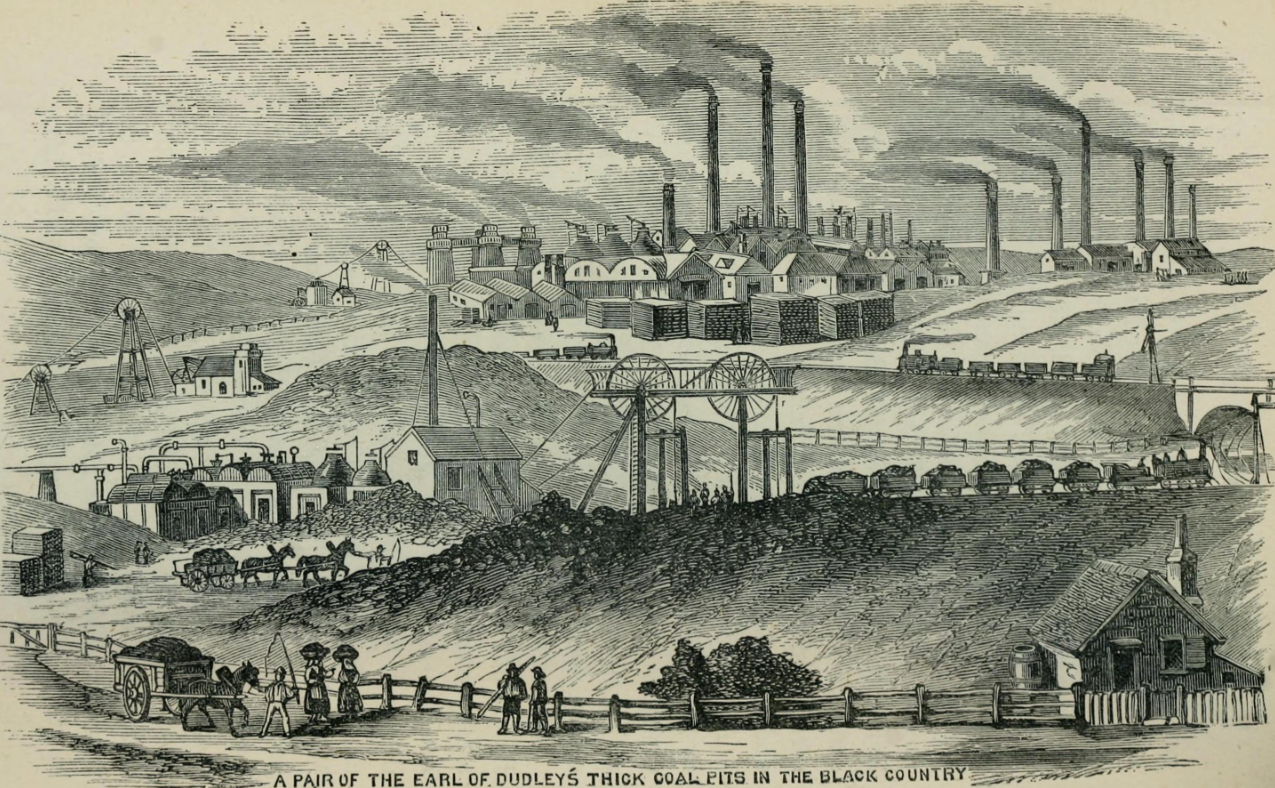
Economically, modernity is bound up with capitalism, industrialization, and urbanization. Factories, railways, and cities reorganized both production and everyday life. Culturally, modernity elevated personal autonomy and creativity. Scientific progress transformed not only our knowledge of nature, but also our expectations for political and social institutions.
The changes were profound.
First, value increasingly became subjective. In the premodern world, people often assumed that value was built into the structure of things. In the modern world, what individuals assign value to begins to matter more and more.
Second, the idea of a fixed natural order weakened. The old conviction that meaning is simply given gave way to the modern belief that destiny must be made rather than received.
Third, once rationality disrupted the old natural and religious order, human beings tried to build a new order through rational institutions.
But the cost of this liberation is severe.
For the individual, the collapse of old certainties creates anxiety. If God is dead, what do we believe in? If inherited meanings no longer command automatic obedience, how do we justify our lives? Reason can illuminate many things, but it does not easily generate meaning.
For society, modernity creates a crisis of legitimacy. Traditional hierarchies relied on sacred narratives. Modern societies claim to rest on freedom and equality, yet power, class, and domination do not disappear. They still require stories that people can accept. The question is whether those stories can survive rational scrutiny.
That is the background for the thinkers below. Each of them, in very different ways, is trying to answer the disruptions modernity creates.
Max Weber
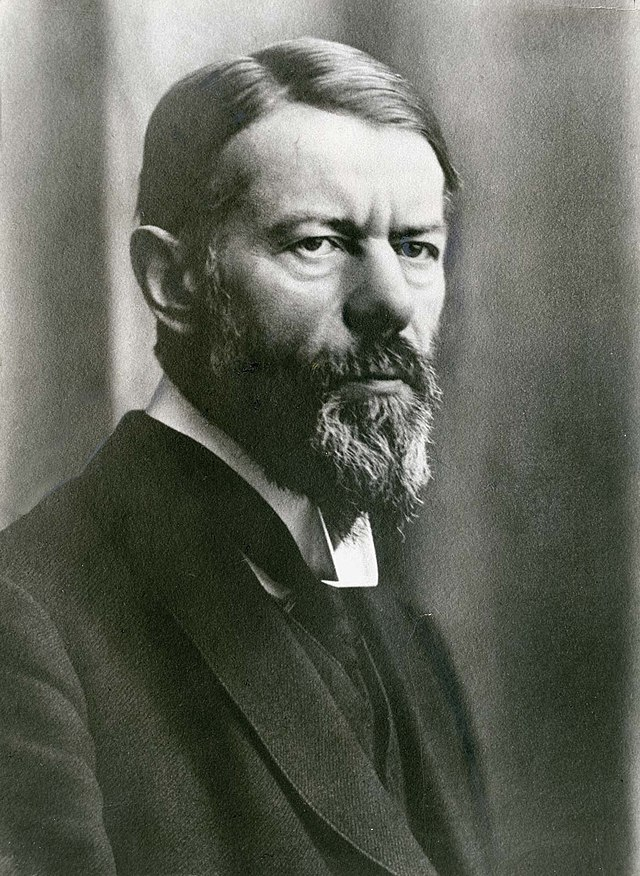
Max Weber remains one of the clearest diagnosticians of modern civilization. Four ideas matter especially here: disenchantment, the conflict of values, instrumental reason, and the iron cage.
Disenchantment
“Disenchantment” names the process by which the world loses its sacred and mysterious aura. Religion is no longer the uncontested source of meaning. Scientific explanation, rational inquiry, and bureaucratic organization strip away magic and transcendence.
Weber does not mean that religion simply vanishes. He means that religion can no longer structure the public world in the same unquestioned way. Individuals must now justify their own commitments. This opens a space for freedom, but it also creates a crisis of meaning.
As Weber put it, the fate of our time is that the highest values have withdrawn from public life.
Disenchantment is therefore a form of intellectual adulthood. We lose comfort, but we gain honesty.
The Conflict of Values
Once the old sacred order retreats, values no longer harmonize automatically. Science can describe facts, but it cannot decide what ought to matter most. Ethics, religion, art, law, politics, and personal commitment all pull in different directions.
This is Weber's image of the “struggle of the gods”: competing value systems that cannot be reduced to one final standard. In modern life, the god one person serves may look like a demon to another.
That is not a temporary inconvenience. It is a structural condition of modernity. Weber's answer is not to restore a false unity, but to live with inner consistency and seriousness. If there is no universally shared order of values, then each person has to choose and take responsibility for that choice.
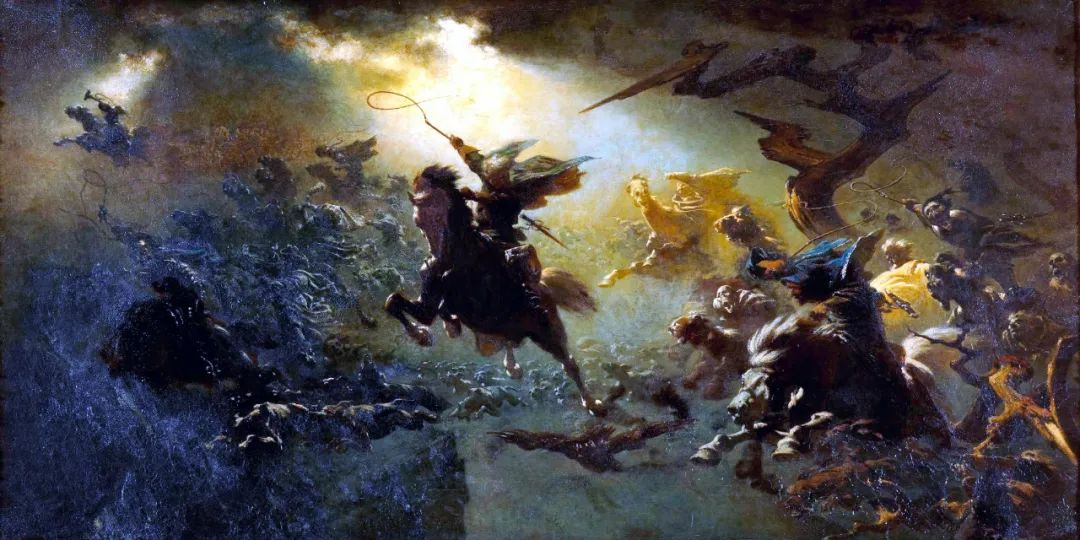
Instrumental Reason
Weber distinguishes between instrumental reason and value rationality. Instrumental reason asks which means are most efficient. Value rationality asks whether the end itself is worth pursuing.
Modernity massively empowers instrumental reason. Capitalism, bureaucracy, and administrative systems optimize for calculation, control, and performance. This produces extraordinary gains in productivity and organization. But when instrumental reason escapes all guidance from value, it becomes dangerous. Efficiency starts to replace meaning. Growth replaces judgment. Human beings become units to be managed.
The Iron Cage
The “iron cage” is Weber's image for the structures modern rationalization creates. Bureaucratic systems are orderly and efficient, but they can also be cold, dehumanizing, and self-perpetuating. People become role-bearers rather than whole persons. The system runs, and individuals learn to speak its language.
You can see the cage in ordinary phrases: “human resources,” “self-improvement,” “competitiveness.” All of them translate human life into administrative or economic categories.
Weber's warning is not that organization is unnecessary. It is that human beings cannot be exhausted by the logic of systems.
Man is an animal suspended in webs of significance he himself has spun.
Nietzsche
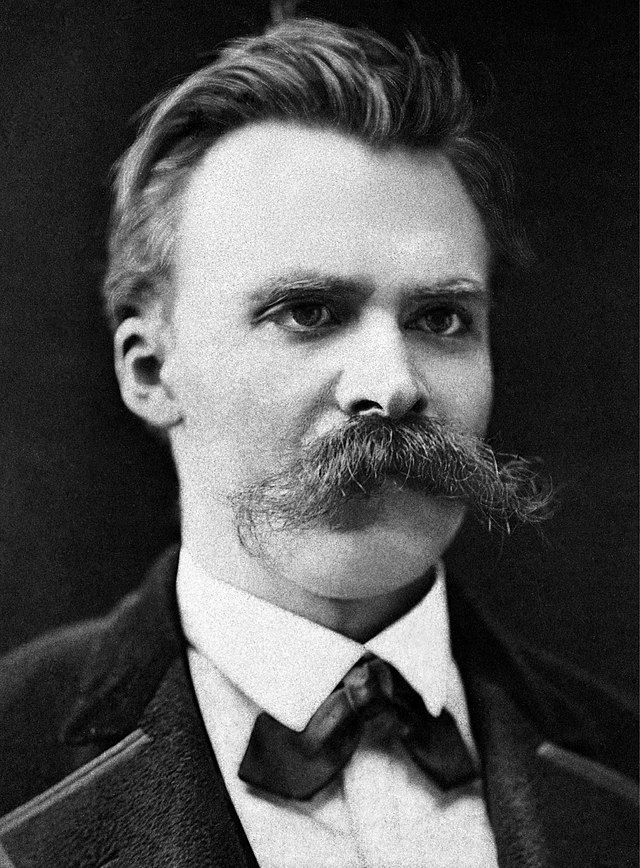
Nietzsche is often treated as a prophet of destruction. A better reading is that he descends into nihilism in order to find a way beyond it.
God Is Dead
Nietzsche's declaration that “God is dead” is not a childish provocation. It is a civilizational diagnosis. The old metaphysical order no longer holds. The belief that truth, morality, and meaning rest on a transcendent foundation has become unstable.
The crisis is not simply religious. It is existential. If the old guarantee collapses, then human beings face a void. The point is not to mourn the old idol forever. The point is to admit that we can no longer hide behind it.
Nietzsche thinks Western metaphysics created a false split between the changing world of experience and a supposedly eternal world of truth. We invented these stable realms because we feared uncertainty, contradiction, and becoming. We wanted security more than honesty.
The death of God destroys that illusion. It is painful, but it is also liberating. If no pre-given meaning exists, then meaning must be created.
The Overman
This is where Nietzsche introduces the idea of the Overman. The Overman is not a dictator, a master race, or some comic-book superhuman. It is a figure for spiritual self-overcoming: the human being who creates values instead of borrowing them.
Nietzsche writes that man is a rope stretched between animal and Overman, over an abyss. We are transitional beings. We are no longer fully ruled by instinct, but we are not yet fully authors of ourselves.
The Overman represents a higher form of life: one that refuses illusion, accepts suffering, and creates meaning through strength, style, and affirmation. Nietzsche's deepest moral demand is not obedience but becoming.
Become Who You Are
Nietzsche's life was marked by illness, loneliness, misunderstanding, and ultimately collapse. Yet he turned suffering into intellectual force. That is why “become who you are” is not motivational fluff in his work. It is a severe demand.
To become oneself is to stop hiding behind borrowed identities. It is to accept fate without surrendering to passivity. Nietzsche calls this amor fati: the love of fate.
The point is not that suffering is good in itself. The point is that one can transform suffering into form, style, and strength.
What does not kill me makes me stronger.
Sartre
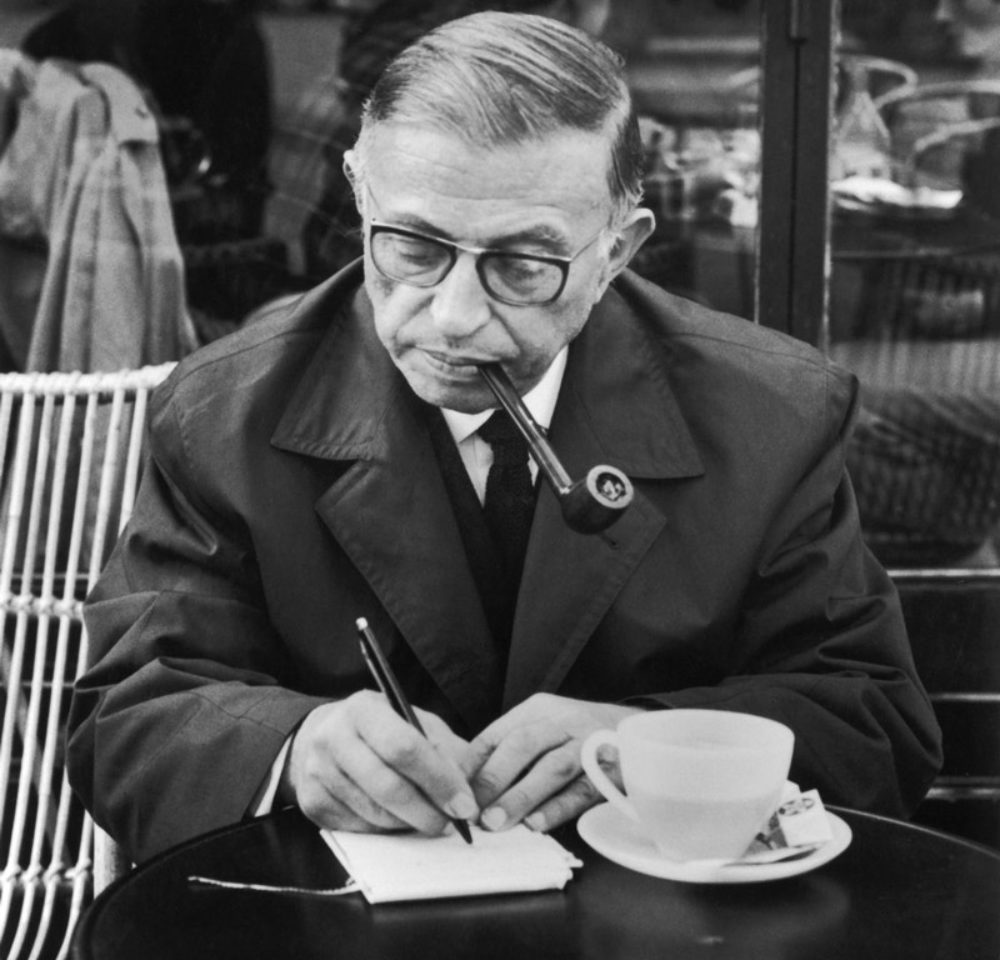
If Nietzsche destroys false guarantees, Sartre asks what life looks like once we accept that no essence has been assigned to us in advance.
Existence Precedes Essence
Sartre's most famous claim is that existence precedes essence. A paper cutter is made according to a plan; its purpose is defined before it exists. Human beings are different. We are thrown into existence first and only later define ourselves by what we do.
This is what Sartre means by freedom. Human consciousness is not a fixed thing with a preset nature. It is open, unsettled, and projective. We are not born with a final script. We create ourselves through action.
Freedom
At first glance, this sounds terrifying. If nothing guarantees who I am, then I have no stable foundation. But Sartre insists that this very groundlessness is what makes freedom possible.
A blank stage is empty, but that emptiness is also the condition of performance. A blank page contains nothing, but precisely for that reason it can receive anything.
Human beings do not choose their birthplace, talents, or historical moment. But we do choose how to interpret and respond to those conditions. That is why Sartre says we are condemned to be free.
The Burden of Freedom
Freedom is not pleasant in a simplistic sense. Every choice excludes alternatives. Every choice also implies a value judgment. Once absolute standards disappear, we cannot offload responsibility onto God, tradition, or society.
That is why freedom produces anxiety. Even refusing to choose is already a choice.
This burden is inseparable from dignity. To be human is not merely to enjoy options. It is to be responsible for the person one becomes.
Hell Is Other People
Sartre's famous line “Hell is other people” is usually misunderstood. He is not saying human relationships are meaningless. He is pointing to the way other people's gaze can objectify us.
When I am seen by another person, I can feel myself turned into an object in their world. I lose control over my image. I am fixed from the outside. That loss of sovereignty is painful.
But the gaze of others also helps reveal who we are. Without others there is no shame, but also no pride. The presence of others is both a threat and a condition of self-awareness.
There is no determinism. Man is free. Man is freedom.
Hayek
Hayek is one of the great critics of rationalist overconfidence in politics and economics.
Spontaneous Order
The key to Hayek is spontaneous order. Many stable social patterns are not designed from above. They emerge from countless local actions, adjustments, and experiments.
A path across a field is a simple example. No central planner dictates where it should appear. But as more people choose similar routes, a path gradually forms. Order emerges without a designer.
For Hayek, much of society works like this. Markets, customs, and institutions often embody dispersed knowledge that no single mind can fully possess.
The Market as an Information System
This is why Hayek sees the market as more than a place of exchange. It is a mechanism for processing distributed information. Prices communicate scarcity, demand, preference, and coordination signals across society.
The point is not that markets are morally perfect. The point is epistemic: centralized planners cannot know enough to replace the information embedded in decentralized activity.
Against Rationalist Hubris
Hayek's target is the arrogance of believing society can be redesigned as if it were a machine. Human reason is powerful, but not omniscient. Order sometimes arises precisely because no one is fully in charge.
This does not mean every institution should be left untouched. It means that redesigning large systems requires respect for complexity and for knowledge we do not possess.
Rawls
John Rawls tries to answer a different question: what would a just society look like if we designed it fairly?
The Veil of Ignorance
Rawls asks us to imagine choosing the basic rules of society from behind a veil of ignorance. You do not know whether you will be rich or poor, healthy or sick, talented or disadvantaged, part of a majority or minority.
This setup is meant to neutralize self-interest. If you do not know where you will land, you will choose rules that are fair from any position.
Two Principles of Justice
Rawls argues that people in this original position would choose two principles.
First, each person should enjoy an equal set of basic liberties compatible with the same liberties for others.
Second, social and economic inequalities are acceptable only if they satisfy two conditions: positions must be open under fair equality of opportunity, and inequalities must benefit the least advantaged members of society.
The moral force of Rawls lies in his refusal to treat talent or birth as moral desert. Much of what we have is arbitrary from the standpoint of justice. Institutions should therefore be arranged to mitigate, not glorify, luck.
Nozick
Robert Nozick writes partly against Rawls and defends a much thinner state.
Rights and the Minimal State
For Nozick, individuals possess strong rights that cannot be violated for the sake of a patterned social ideal. A just society is not one that fits a preferred distributional shape, but one in which holdings arise through legitimate processes.
His entitlement theory has three parts: just acquisition, just transfer, and rectification of injustice where these rules were violated.
If property is acquired and transferred justly, then the resulting distribution is just, even if it is highly unequal. Nozick therefore rejects redistributive schemes that repeatedly interfere with voluntary exchange.
The Moral Core of Libertarianism
Nozick's view can be criticized on many fronts, but its moral core is clear: persons are not resources to be arranged for collective ends. There are side constraints on what can be done to them. That insistence on the inviolability of the person remains philosophically powerful.
Habermas
If Weber diagnoses modern fragmentation, Habermas tries to rescue a form of reason that does not collapse into domination.
Communicative Action
Habermas distinguishes communicative rationality from the merely instrumental kind. Instrumental reason treats others and the world as objects to manipulate. Communicative reason aims at mutual understanding.
In ordinary language, whenever we make claims, we implicitly invite others to challenge them. That structure creates the possibility of rational discussion.
The Public Sphere
Habermas also emphasizes the public sphere: the social space in which citizens debate matters of common concern. A healthy modern society depends not only on markets and bureaucracies, but also on institutions that protect open argument and democratic legitimacy.
His ideal speech situation is never fully realized, but it functions as a standard: communication should be free, inclusive, and uncoerced.
Where Weber saw the rise of systems that trap us, Habermas looks for a form of reason that can still ground solidarity.
Conclusion
These seven thinkers do not fit neatly together. Weber is tragic, Nietzsche volcanic, Sartre severe, Hayek suspicious of design, Rawls constructive, Nozick combative, Habermas reconstructive. But read together, they map the structure of the modern condition.
Modern people inherit unprecedented freedom and unprecedented instability. We have more room to choose, but fewer unquestioned answers. We can criticize old authorities, but we still need standards. We can build systems of extraordinary scale, but we risk becoming trapped inside them.
If there is one lesson I take from this journey, it is this: human beings become great because we possess reason, but we become mature only when we understand the limits of reason.
Intellectual humility is not weakness. It is the discipline that keeps freedom from turning into arrogance and keeps rationality from turning into domination.