The Self and the Other

Western Philosophy
Consciousness and Subjectivity
Western philosophy offers many answers to the problem of self and other.
A natural place to begin is self-consciousness: how do I know that I am myself?
John Locke's theory of personal identity emphasizes the continuity of consciousness. On this view, I recognize myself as the same person because memory and conscious experience are linked across time. What makes me "me" is not an unchanging substance, but a continuity of inner experience.
The second question is equally important: how do I know that the other person is truly another subject rather than merely an extension of myself?
That question leads us to intersubjectivity. Emmanuel Levinas, for example, emphasizes that our encounter with the Other is fundamental. We do not discover the other person merely as an object in the world. We encounter another center of experience through relation, expression, and ethical exposure.
At the same time, Western philosophy often ties this issue back to subjectivity itself. Descartes' "Cogito, ergo sum" remains the classical example: in doubting everything else, I encounter the indubitable fact of my own thinking. Through this reflexive awareness, I distinguish myself from what is not myself.
In short, Western philosophy often approaches the problem by asking:
- what grounds self-awareness?
- what makes personal identity continuous?
- how do we recognize another subject as distinct from ourselves?
Buddhism
Anatta: No-Self
Buddhism approaches the issue very differently.
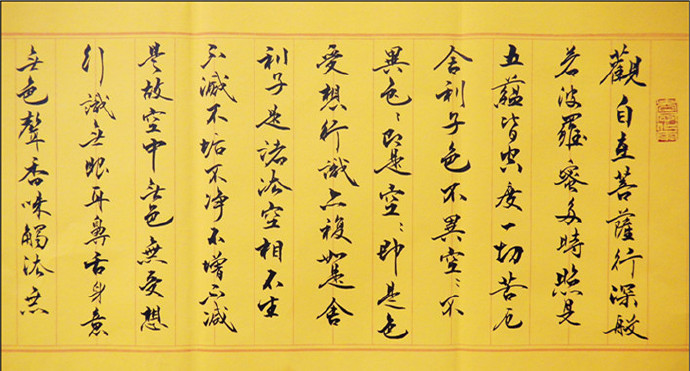
One of its core teachings is anatta, or no-self. In this framework, there is no permanent, unchanging essence that can be called "the self." Attachment to such a self is one of the roots of suffering.
What we usually call "I" is, from a Buddhist perspective, a temporary aggregation of body, sensation, perception, mental formations, and consciousness. These are all changing processes, not a fixed inner entity.
Through meditation and insight, one gradually realizes that the self is not a stable substance but a conditional and impermanent construction. This insight loosens attachment and opens a path toward liberation from suffering.
Under this view, the question "How do I know that he is he, and not me?" is reinterpreted. Buddhism explains existence through dependent origination: things arise through conditions and relations. Self and other are not absolutely separate substances, but temporary formations within an interdependent world.
So Buddhism does not merely redraw the border between self and other. It weakens the border itself.
Confucianism
Ren
Confucianism offers yet another perspective.
It is less concerned with proving self-consciousness in the abstract and more concerned with how the self is formed through roles, relationships, and moral responsibility.
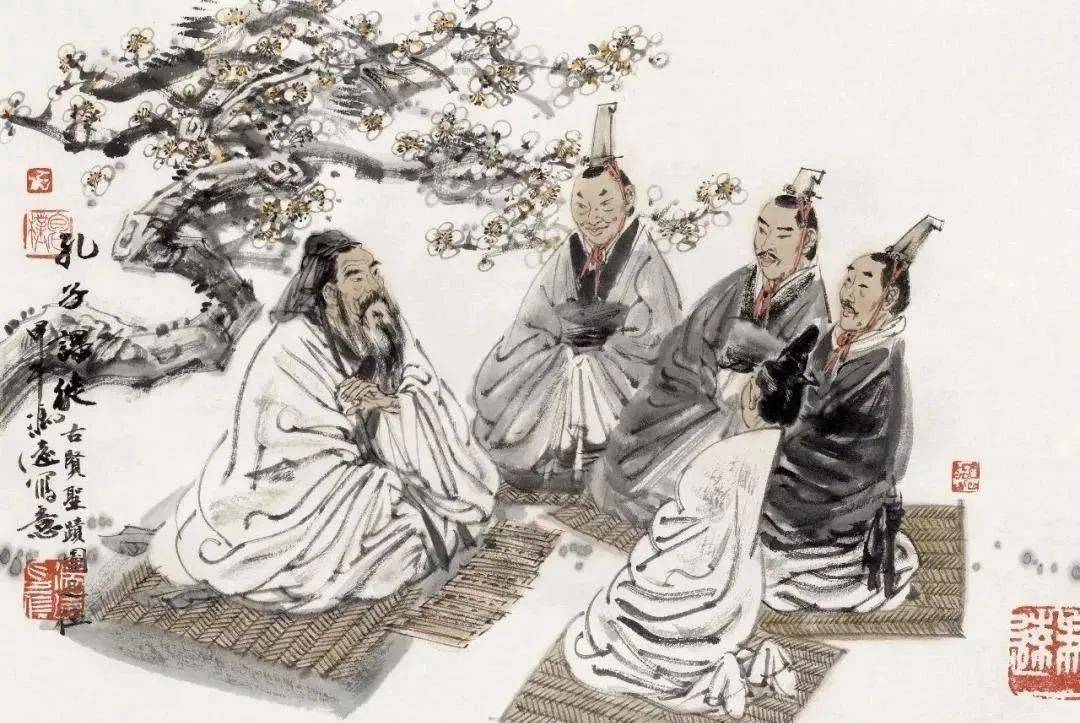
In Confucian thought, the person is not first understood as an isolated inner subject. Identity emerges through participation in a network of social relations: parent and child, ruler and minister, husband and wife, elder and younger sibling, friend and friend.
One of the key concepts here is ren, often translated as benevolence or humaneness. To know oneself is, in part, to know how to inhabit one's relationships properly and ethically.
That means the question "How do I know I am myself?" becomes less metaphysical and more practical:
How do I fulfill my role as a moral person within family and society?
Confucianism therefore defines selfhood not mainly through introspective consciousness, nor through the dissolution of self, but through ethical cultivation inside human relationships.
My Reflection
These traditions offer very different handles on the same problem.
- Western philosophy tends to begin from reason, subjectivity, and the epistemic distinction between self and other.
- Buddhism questions the permanence of the self altogether and emphasizes interdependence.
- Confucianism focuses on ethical roles and social responsibility as the basis of human selfhood.
None of these frameworks is simply right or wrong. What interests me is that each one became part of a larger civilizational trajectory. Over time, different understandings of the self and the other hardened into broader systems of thought, and eventually into different ideologies.
That is why I often find ideology itself less interesting than the underlying philosophical machinery that produces it.
At its core, ideology is often just a way of stabilizing the distinction between "us" and "them." The irony is that most people do not arrive at that distinction through careful reflection. More often, they inherit it through social pressure, emotional contagion, and collective manipulation.
This is hardly new. In the Zuo Zhuan, the line "Those who are not of our kind must have different hearts" expresses an ancient form of distinguishing insider from outsider. Once such a distinction is established, it can easily expand into a moral binary between good and evil.
Even today, society is still filled with simplified oppositions of this kind:
- proletariat vs. bourgeoisie
- capitalism vs. socialism
- civilization vs. barbarism
Such binaries are politically powerful because they mobilize people and strengthen collective identity. But they often erase the complexity of actual human experience and the possibility of crossing those boundaries.
That, perhaps, is why the question of self and other remains permanently alive. It is never only a philosophical question. It is also a civilizational one.